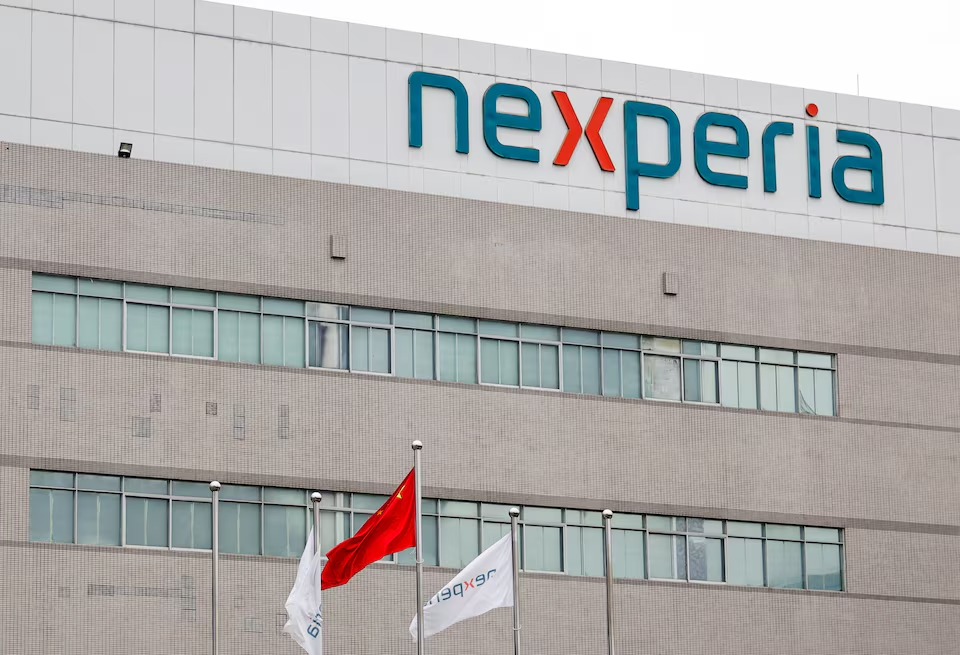
A Chinese court has frozen up to 2.14 billion yuan ($300 million) in assets linked to Dutch chipmaker Nexperia, escalating a dispute over control of the company between its Chinese parent, Wingtech Technology, and authorities in the Netherlands.
The order was issued by the Dongguan Intermediate People's Court following a lawsuit filed by Wingtech and its subsidiary, Yucheng Holding. The frozen assets include Nexperia's stakes in four China-based businesses.
The measures cover Nexperia's operations in China, Wuxi and Shanghai, as well as a 99% stake in Nexperia Semiconductor Technology Shanghai. Nexperia's equipment arm also has a wholly owned subsidiary in Wuxi covered by the order.
The asset freeze took effect between August 20 and August 25 and is scheduled to remain in place until August 2029.
The move is the latest development in a dispute that began after the Dutch government intervened in Nexperia last year, citing national security concerns over the possible transfer of technology, funds and production assets outside the Netherlands.
Nexperia is headquartered in the Netherlands but has extensive manufacturing operations in China. The company produces semiconductors widely used in automobiles, consumer electronics and industrial equipment.
Wingtech Seeks Billions in Damages
Wingtech and Yucheng filed a lawsuit in May against Nexperia, its holding and equipment companies and three executives.
The Chinese companies are seeking 8 billion yuan ($1.1 billion) in damages. They accuse the defendants of carrying out or assisting with what Wingtech described as discriminatory restrictions imposed by the Dutch government.
The case has not yet gone to trial.
The latest court order does not transfer ownership of the frozen assets to Wingtech, nor does it resolve the wider dispute over control of Nexperia. It instead prevents the affected stakes from being disposed of or otherwise dealt with while the legal proceedings continue.
How the Nexperia Dispute Started
The conflict intensified last year when Dutch authorities took action against Nexperia, removing Wingtech's effective control of the company and citing national security concerns.
A Dutch business court subsequently suspended Nexperia's chief executive and placed voting rights connected to Wingtech's shareholding under independent management.
China later responded with export controls affecting Nexperia's China operations, disrupting shipments of components from the company's Chinese facilities.
Following discussions between Beijing and The Hague, China agreed to allow supplies to resume, while the Netherlands suspended its intervention order. Wingtech, however, has not regained the voting control it previously held.
The latest Chinese court action therefore adds another legal dimension to a dispute already being handled across two jurisdictions.
Why Nexperia Matters
Nexperia is an important supplier of basic semiconductor components used across several industries.
Its products are found in vehicles, consumer electronics and industrial equipment, meaning prolonged disruption to the company's operations could affect manufacturers that depend on its components.
The dispute has already created concerns over international semiconductor supply chains, particularly because Nexperia's production network spans Europe and China.
The Chinese court's decision does not itself mean that Nexperia's operations have been taken over or shut down. The immediate effect is the freezing of specified company stakes while the legal dispute proceeds.
Nexperia and its equipment arm had not immediately responded to requests for comment in the Reuters report.
For Wingtech, the order provides another legal avenue in its effort to regain control of Nexperia. For the wider semiconductor industry, it adds another layer of uncertainty to an already complicated dispute between China and the Netherlands.
The underlying ownership battle remains unresolved, and the Chinese lawsuit has yet to reach trial.



 HOME
HOME Foodies
 Drinks
 Fruits & Veggies
 Supermarket
 Beauty & Health
 Electronics
 Fashion
 Live Tv